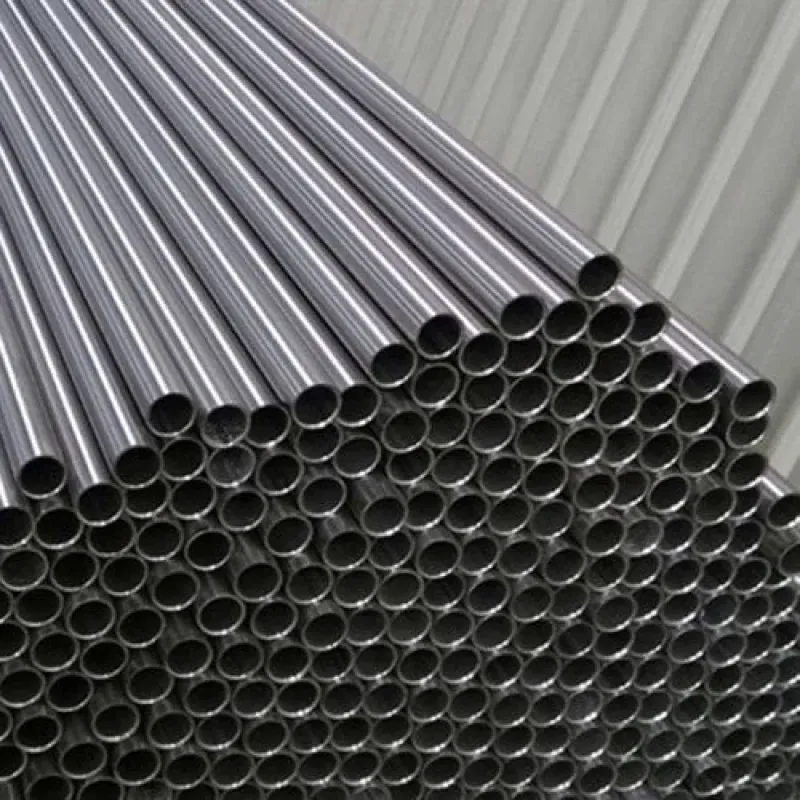
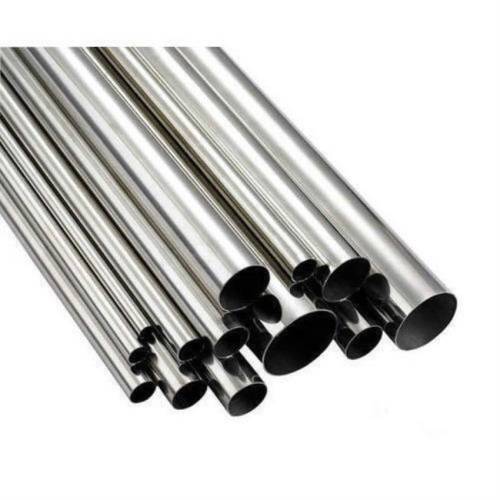
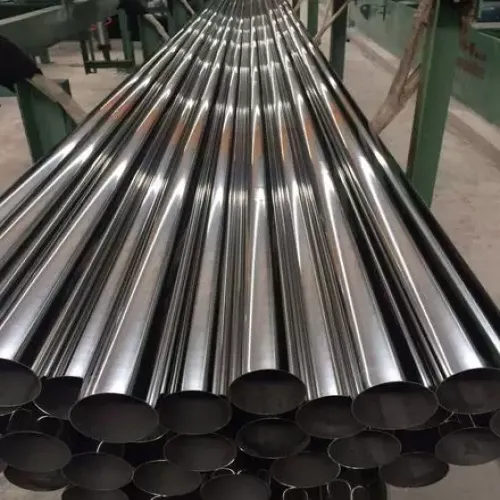
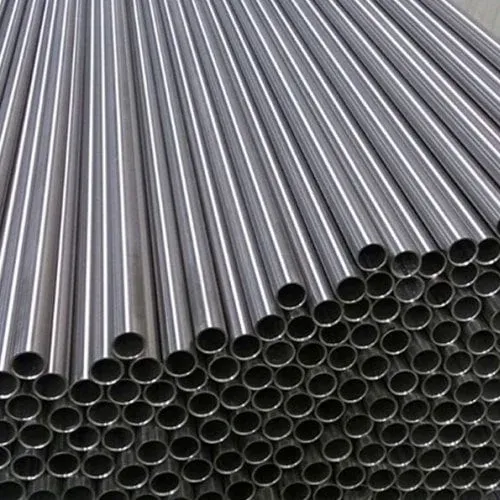
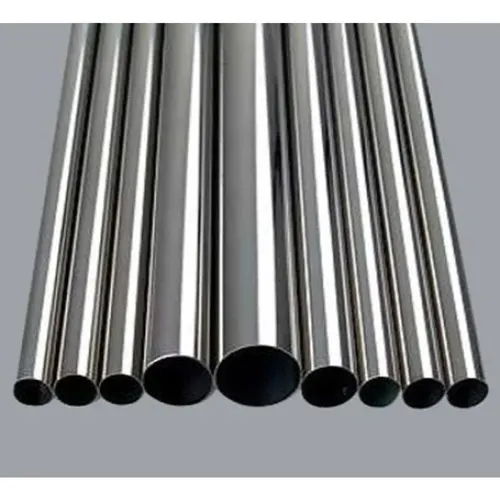
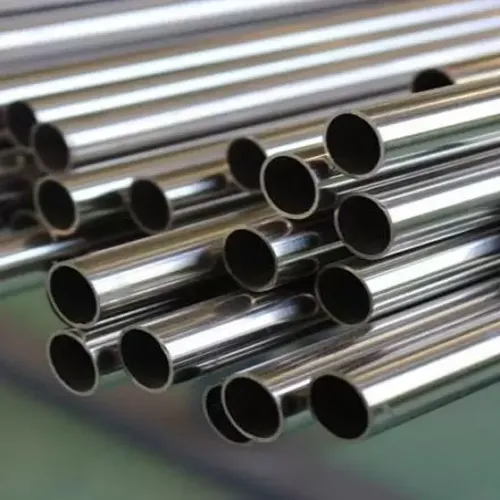
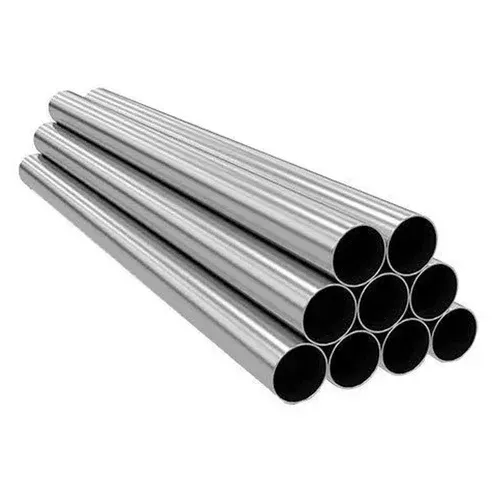
SS 347H pipe is a high-carbon, niobium-stabilized austenitic stainless steel grade built for sustained service in the 400°C-815°C carbide-precipitation range, where ordinary austenitic grades lose corrosion resistance at the weld line over time. Niobium binds preferentially with carbon to form stable niobium carbides, protecting the chromium layer from depletion, while the deliberately high carbon content (0.04%-0.10%) that gives the grade its "H" designation preserves tensile strength and creep-rupture performance under continuous high-temperature, high-pressure load. Manufactured by Siddhgiri Overseas, a Mumbai-based stainless steel pipe manufacturer operating since 1962, SS 347H pipe is supplied across small, medium, and heavy size ranges for refinery, power generation, and chemical processing applications, with dimensional checks carried out before dispatch and Mill Test Certificates available for every consignment.
SS 347H is a niobium (columbium) stabilized austenitic stainless steel pipe grade, developed specifically to hold up under long-term, continuous exposure to high temperatures and corrosive process conditions. It belongs to the same family of stabilized grades as SS 321, but takes a different approach to both stabilization and strength retention, which is why it exists as a distinct specification rather than a variant.
The core engineering problem SS 347H solves is sensitization: when standard austenitic stainless steels are held in the 400°C-815°C (750°F-1500°F) range for extended periods — exactly the range found in boiler tubes, superheater bundles, and refinery process piping — carbon in the steel reacts with chromium to form chromium carbides at the grain boundaries. This depletes the chromium available to maintain the passive protective layer, leaving the material vulnerable to intergranular corrosion, commonly called weld decay, right where it matters most: at and near weld seams.
SS 347H addresses this by adding niobium, an element with a stronger chemical affinity for carbon than chromium has. Niobium reacts with the carbon first, forming fine, evenly dispersed niobium carbides throughout the microstructure instead of at the grain boundaries, so the chromium stays where it's needed. The "H" in the designation signals that carbon content is intentionally kept high (0.04%-0.10%) rather than minimized, which is what gives this grade its strength and creep resistance advantage at elevated temperature.
Siddhgiri Overseas manufactures SS 347H pipe across a full range of sizes and schedules, with dimensional verification carried out before every dispatch and Mill Test Certificates provided for traceability.

SS 347H and SS 321 both solve the same underlying problem — carbide precipitation and weld decay — using the same basic mechanism: stabilization. Both grades add an element that bonds with carbon more readily than chromium does, so that carbon is tied up as harmless, dispersed carbides instead of stripping chromium from the grain boundaries. Where they differ is in which stabilizing element they use, and that difference has real consequences in service.
SS 321 uses titanium. SS 347H uses niobium. Both work, but niobium carbides are more thermally stable than titanium carbides, particularly at the upper end of the high-temperature service range. This means 347H holds its stabilization advantage more reliably as temperatures climb toward the top of the 400°C-815°C window and beyond.
The more critical distinction is at the weld itself. Titanium can volatilize — effectively burn off — in the heat of a welding arc, which can locally reduce the amount of stabilizer actually available right at and near the weld seam in 321 pipe. Niobium does not volatilize the same way. It stays in place through the welding process, so SS 347H pipe retains its corrosion resistance more consistently exactly where sensitization risk is highest: the heat-affected zone around a weld.
Layered on top of the niobium/titanium distinction is the "H" strategy itself. SS 347H deliberately keeps carbon high (0.04%-0.10%) rather than reducing it, because the niobium stabilization already neutralizes the weld-decay risk that high carbon would otherwise cause. Keeping carbon high preserves tensile strength, creep-rupture strength, and resistance to sagging or deformation under continuous extreme heat and pressure — properties that matter directly in boiler tubes and high-temperature process piping under sustained load, and that a low-carbon "L" strategy would trade away.
In practical terms: choose SS 347H over SS 321 where the combination of very high service temperature, weld-seam integrity, and long-term structural load-bearing capacity all matter together — such as superheater tubing, FCCU piping, and high-pressure steam headers.
One caveat worth noting: in certain repeated-reheat welding conditions, stabilized grades including 347H can be subject to a rare, localized corrosion phenomenon called knife-line attack, occurring in a narrow band immediately adjacent to the weld. It is manageable with proper welding temperature control and is not a reason to avoid the grade, but it is a known characteristic worth factoring into welding procedure specifications.
SS 347H is defined by its niobium stabilization and its deliberately elevated carbon content. The table below summarizes the key chemical composition limits.
|
Carbon (C) |
0.04 - 0.10 (kept high deliberately for strength) |
|
Chromium (Cr) |
17.00 - 19.00 |
|
Nickel (Ni) |
9.00 - 13.00 |
|
Niobium (Nb) + Tantalum |
10x C minimum, up to 1.10 max (stabilizer) |
|
Manganese (Mn) |
2.00 max |
Mechanical properties are correspondingly robust, reflecting the strength benefit of the high-carbon "H" strategy:
|
Yield Strength |
205 MPa |
|
Tensile Strength |
515 MPa |
SS 347H is cross-referenced across the major international designation systems as follows:
|
1.4961 |
X8CrNiNb16-13 |
TP347H (ASTM A312) |
Every batch of SS 347H pipe supplied by Siddhgiri Overseas undergoes dimensional checks prior to dispatch, with Mill Test Certificates (MTC) issued to document chemical and mechanical conformance.
It is worth noting that SS 347H contains no molybdenum. It is therefore not the appropriate grade for room-temperature marine or chloride-rich environments — SS 316 or 316L, which contain molybdenum for pitting and crevice corrosion resistance, are better suited to that duty. SS 347H's strengths are specifically in sustained high-temperature service.
Siddhgiri Overseas supplies SS 347H pipe across small, medium, and heavy size ranges to match the demands of instrumentation, structural, and heavy process piping applications.
|
Small |
1/8" - 1" NB (15.88 - 33.7mm OD) |
Sch 5S / 10S |
Refinery instrumentation lines, aerospace exhaust manifolds, high-pressure sampling |
|
Medium |
1.25" - 4" NB (42.4 - 114.3mm OD) |
Sch 40S |
Marine turbocharger components, distillation columns, gas collector rings, radiant power-plant loops |
|
Heavy |
6" - 48" NB (168.3 - 1219mm OD) |
Sch 80S - 160 |
High-pressure steam boiler pipe, fluidized catalytic cracking units (FCCU), hydroprocessing headers, refinery transmission lines |
Across these size ranges, SS 347H finds use in four broad application areas:
Refinery and hydroprocessing: Fluid catalytic cracking units (FCCU) and hydroprocessing equipment run continuously at temperatures squarely within 347H's stabilized range, where weld-seam integrity over years of service is essential.
Power generation: High-temperature steam boiler tubes, superheater bundles, and steam header networks depend on 347H's combination of creep resistance and sustained tensile strength under continuous pressure and heat.
Chemical processing: Heat exchangers, high-temperature reactors, and distillation columns benefit from the carbide stability that keeps corrosion resistance intact at the weld even after repeated thermal cycling.
Exhaust and gas handling: Aerospace exhaust manifolds, marine turbocharger parts, and high-temperature gas collector rings all operate in the elevated-temperature, oxidizing conditions 347H is built for.
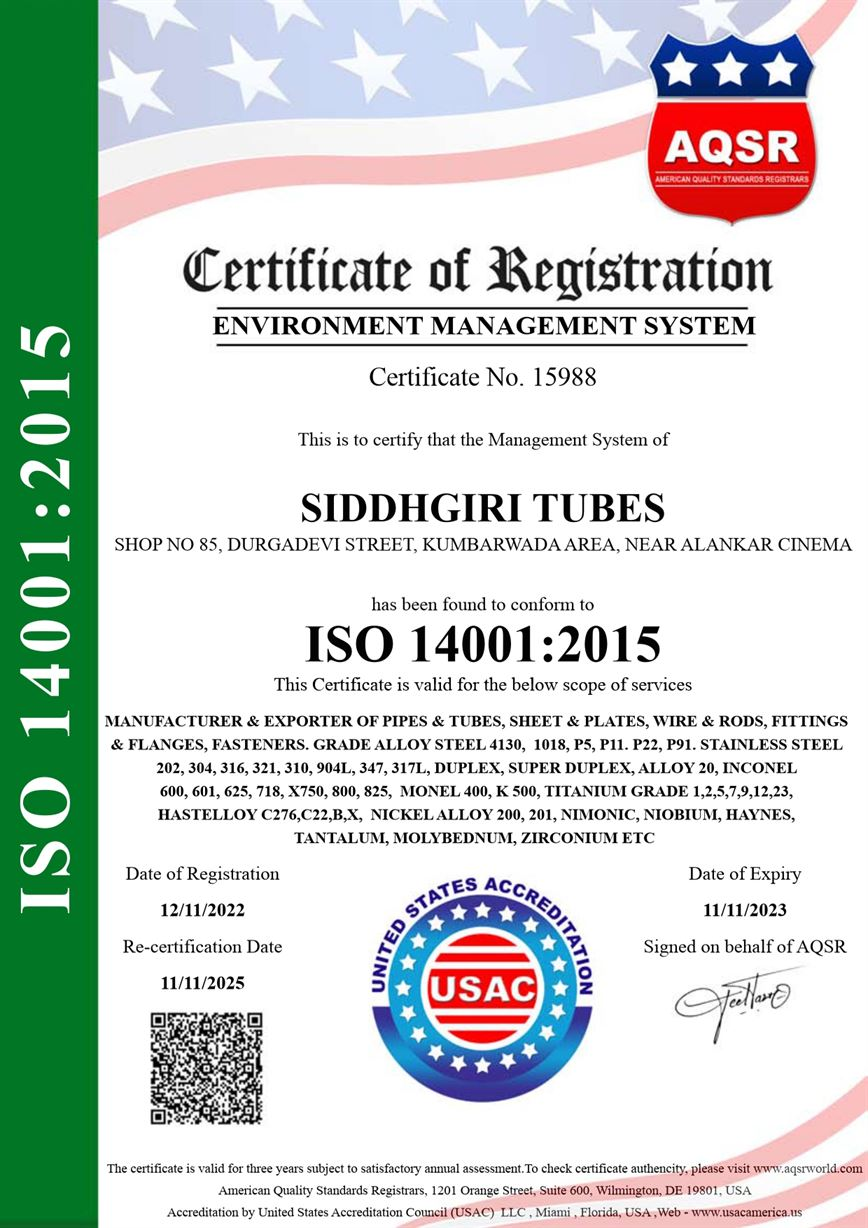
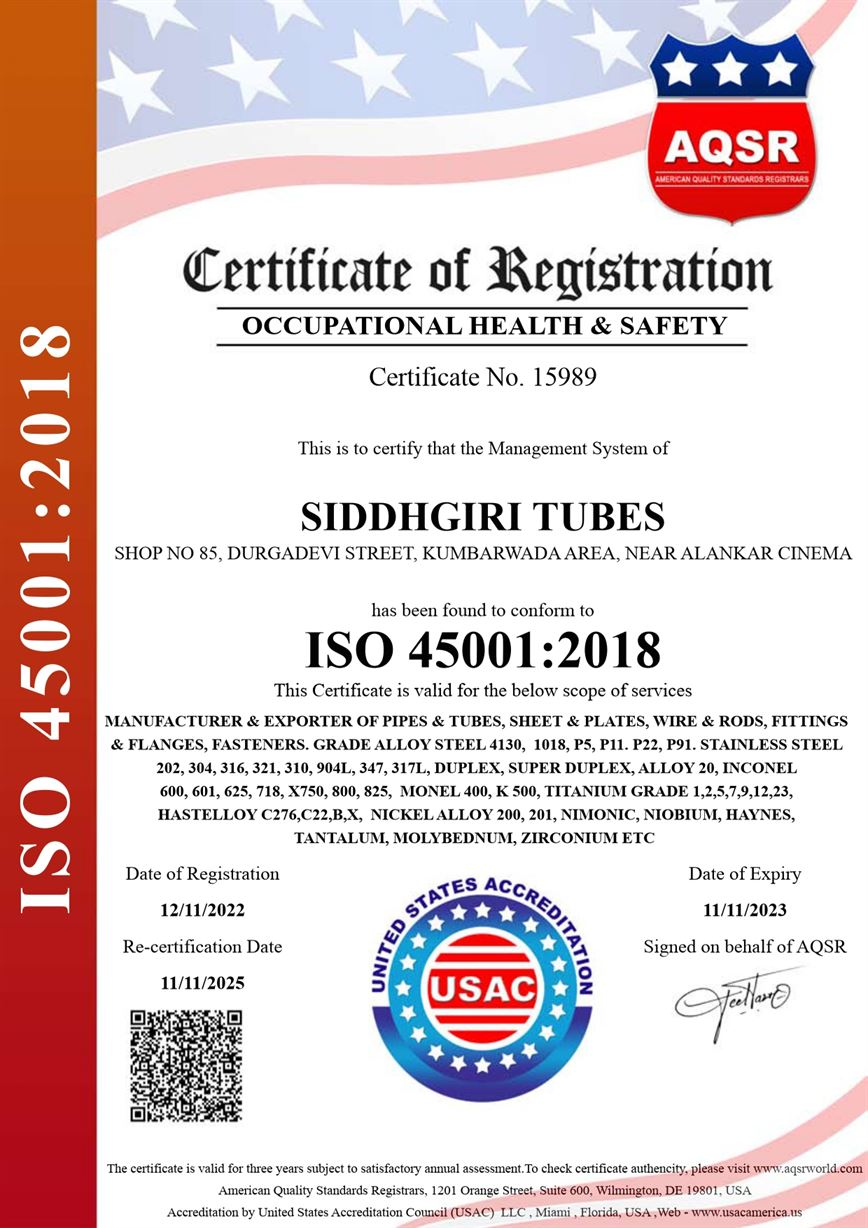
Siddhgiri Overseas is ISO certified for quality, occupational health & safety and environment management, and holds the import and export certification required to supply stainless steel pipe and tube to customers worldwide. Certificate copies are available on request for buyers who need them for their own compliance records.
Both are stabilized austenitic grades that resist weld decay, but they use different stabilizing elements. SS 321 uses titanium, while SS 347H uses niobium, which forms more thermally stable carbides and does not volatilize during welding, giving 347H more reliable corrosion resistance right at the weld seam.
The "H" indicates that carbon content is deliberately kept high, at 0.04%-0.10%, rather than reduced. Because niobium stabilization already neutralizes the weld-decay risk that high carbon would normally cause, keeping carbon high instead preserves tensile strength, creep-rupture strength, and resistance to deformation under continuous high heat and pressure.
Knife-line attack is a rare, localized form of corrosion that can occur in a narrow band immediately next to a weld under certain repeated-reheat welding conditions. It is manageable with proper welding temperature control and is not a reason to avoid the grade, but it is worth accounting for in welding procedure specifications.
No. SS 347H contains no molybdenum, so it does not offer the pitting and crevice corrosion resistance needed for room-temperature marine or chloride-heavy environments. SS 316 or 316L, which are molybdenum-bearing, are the better choice for that service; SS 347H's strengths are specifically in sustained high-temperature applications.
SS 347H is engineered for long-term structural stability and creep resistance across the 400°C-815°C (750°F-1500°F) range, which is the critical carbide-precipitation window where standard austenitic grades are prone to sensitization and weld decay.
Siddhgiri Overseas supplies SS 347H pipe from small instrumentation sizes (1/8"-1" NB, Sch 5S/10S) through medium sizes (1.25"-4" NB, Sch 40S) up to heavy sizes (6"-48" NB, Sch 80S-160), covering applications from high-pressure sampling lines to refinery transmission lines and boiler pipe.
Refinery units such as FCCUs and hydroprocessing equipment, along with power plant boiler tubes and superheater bundles, operate continuously in the 400°C-815°C range under sustained pressure. SS 347H's niobium stabilization protects weld integrity in that range while its high-carbon composition maintains the strength needed under continuous heat and load.