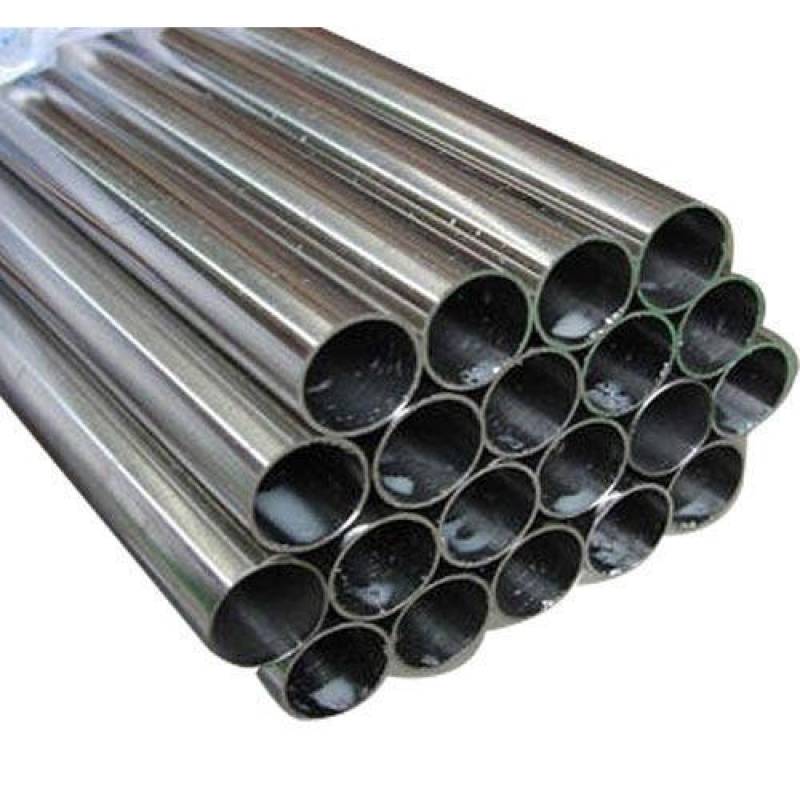
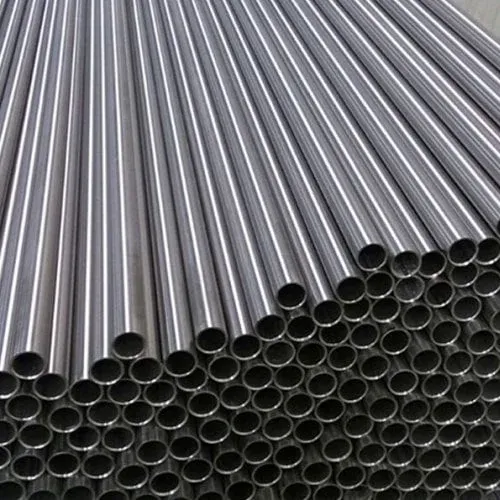
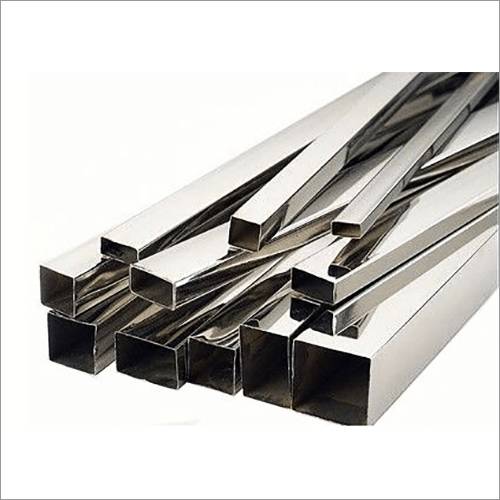
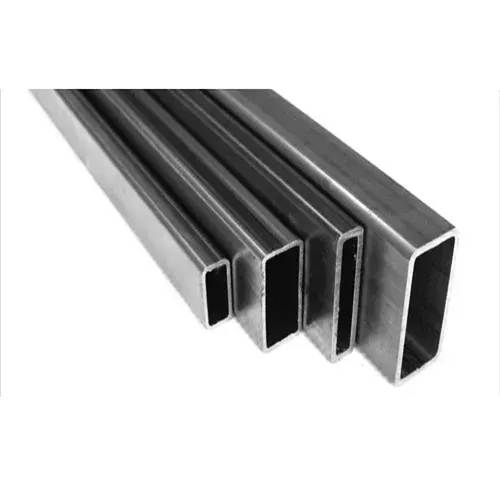
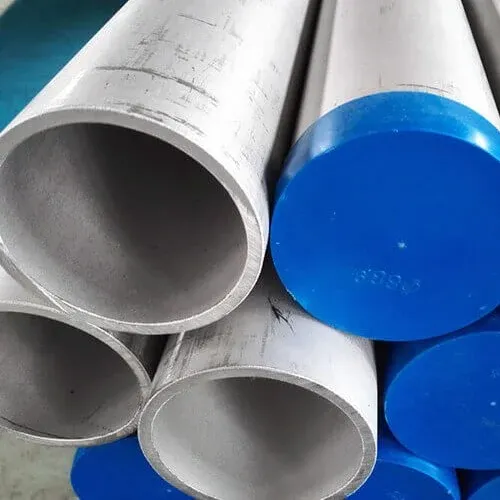
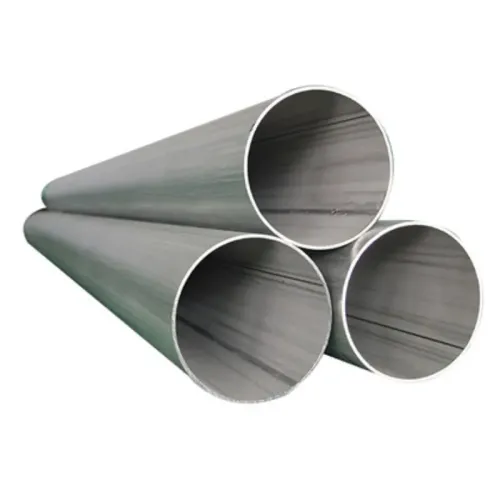
Siddhgiri Overseas manufactures Stainless Steel ERW Pipe as part of its welded pipe range, forming each pipe by rolling flat stainless steel strip into a tube and fusing the longitudinal seam through electrical resistance heating, without filler metal. The process is built on flat strip of controlled gauge, which gives ERW pipe a consistently precise wall thickness, and the weld seam is scarfed on both the inner and outer surfaces immediately after welding, leaving a smooth, unobstructed bore. Available across grades 304, 316L and 321 (including the titanium-stabilized 321 in ERW construction) and in sizes from 21.3mm OD up to 609.6mm (24") OD, these pipes suit applications ranging from structural and architectural tube to larger-diameter process piping. Every pipe undergoes dimensional checks before dispatch, and Mill Test Certificates are issued as standard supporting documentation.
ERW stands for Electric Resistance Welding, a manufacturing method in which flat stainless steel strip is progressively rolled into a round tube shape, and the two longitudinal edges are pressed together and fused using electrical resistance heating. No filler metal is added at the seam — the weld is formed by the heat generated as current passes through the contact point of the pressed edges.
Because the pipe originates from flat strip of controlled thickness, ERW pipe carries a tight, consistent wall thickness along its length. At Siddhgiri Overseas, ERW pipe is produced as part of a broader welded pipe range, with dimensional checks carried out before dispatch to confirm the pipe meets the ordered specification.

The ERW process offers a specific set of structural and commercial advantages over other pipe-making methods:
Stainless Steel ERW Pipe from Siddhgiri Overseas is available in the following grades, cross-referenced against DIN, EN and ASTM A312 pipe grade designations:
|
1.4301 |
X5CrNi18-10 |
TP304 |
|
1.4404 |
X2CrNiMo17-13-2 |
TP316L |
|
1.4541 |
X6CrNiTi18-10 |
TP321 |
Grade 321 (1.4541) is titanium-stabilized and is also available in ERW construction alongside the standard 304 and 316L grades.
Where a project specifies Indian standards alongside these ASTM/DIN/EN references, ERW tube manufacture is additionally covered by IS 1239 and IS 3589, the Indian standards applicable to carbon-steel ERW tube, and referenced where Indian-standard compliance is required for the stainless equivalents. Mill Test Certificates (MTC, for example to EN 10204 3.1) are issued as standard documentation with each dispatch.
Stainless Steel ERW Pipe is manufactured across a wide size range, from 21.3mm OD up to 609.6mm (24") OD, covering everything from small-diameter structural tube through to large-diameter process pipe.
This range makes ERW pipe suitable for structural and architectural framing, mechanical tube applications, and larger-bore piping runs where a smooth internal bore and consistent wall thickness are needed. The scarfed, obstruction-free bore is particularly relevant for pipework where internal surface finish and flow path matter, while the tight wall tolerance suits applications with defined structural or dimensional requirements.
Every ERW pipe is dimensionally checked before dispatch to confirm it meets the ordered size and tolerance.
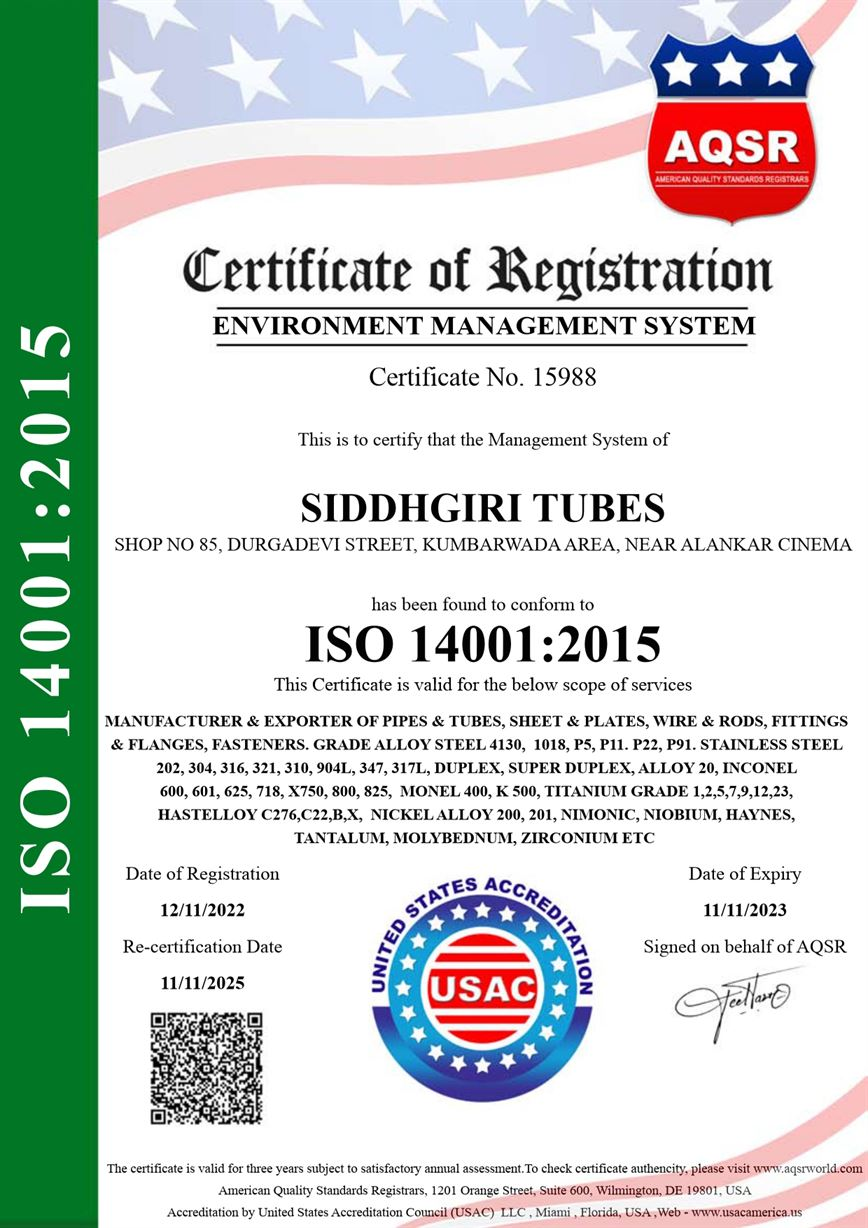
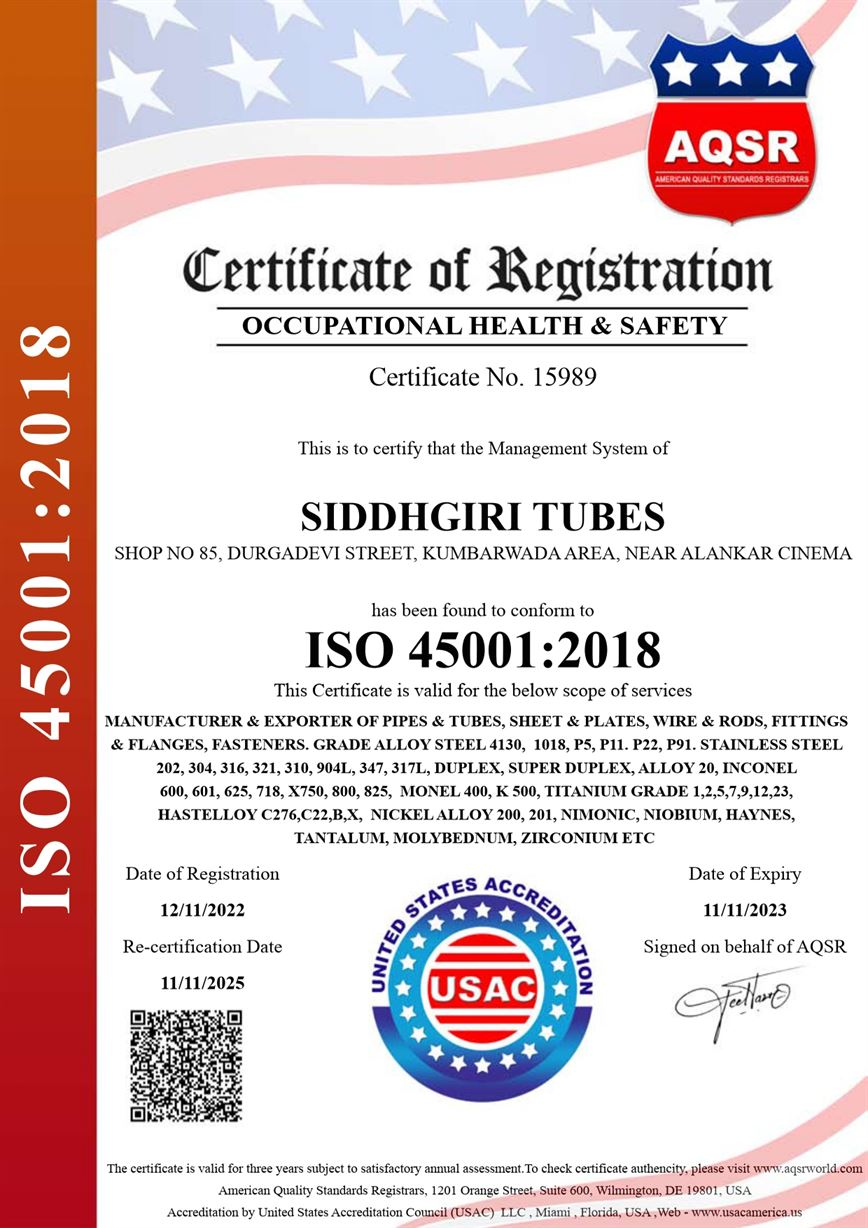
Siddhgiri Overseas is ISO certified for quality, occupational health & safety and environment management, and holds the import and export certification required to supply stainless steel pipe and tube to customers worldwide. Certificate copies are available on request for buyers who need them for their own compliance records.
ERW stands for Electric Resistance Welding. Flat stainless steel strip is rolled into a tube shape, and the longitudinal edges are pressed together and fused using electrical resistance heating, without any filler metal added.
Immediately after the seam is welded, it is scarfed — trimmed on both the inner and outer surfaces — which removes the weld bead. This leaves the internal bore smooth and free of any seam obstruction.
ERW pipe is formed from flat strip and welded along a longitudinal seam using a solid-state, forged bond, while seamless pipe has no seam at all. ERW's strip-based process gives it a precise, consistent wall thickness and strong cost efficiency compared to the seamless process, which is slower and less automatable.
Siddhgiri Overseas manufactures ERW pipe in grade 304 (1.4301/X5CrNi18-10/TP304), 316L (1.4404/X2CrNiMo17-13-2/TP316L) and 321 (1.4541/X6CrNiTi18-10/TP321), including the titanium-stabilized 321 grade in ERW form.
ERW pipe is manufactured from 21.3mm OD up to 609.6mm (24") OD, spanning small structural tube sizes through to large-diameter process pipe.
Yes, where a project specifies Indian standards alongside ASTM, DIN or EN references. IS 1239 and IS 3589 are the Indian standards applicable to carbon-steel ERW tube, and they are referenced for the stainless equivalents in such cases.
The resistance-welded seam forms a solid-state, forged bond rather than a fusion or melt bond. This gives the seam good mechanical integrity without introducing the cast-structure weaknesses associated with melt-based welding processes.
Each pipe undergoes dimensional checks before dispatch, and Mill Test Certificates (MTC, for example to EN 10204 3.1) are issued as standard supporting documentation.